
| Quick answer To stop uncontrolled bleeding after implant surgery, bite firmly on a clean, folded gauze pad placed directly over the site for 30 minutes without checking, keep your head elevated, and avoid rinsing, spitting, straws, and smoking. If heavy bleeding continues for more than an hour with steady pressure, call your dentist right away. |
| 30 min Continuous gauze pressure before checking | 24 hrs Typical window for light oozing | 408-720-0900 Sunnyvale implant help line |
| Key takeaways 1. Light oozing for up to 24 hours is normal; steady active bleeding that soaks gauze is not. 2. Firm, direct gauze pressure for a full 30 minutes is the most reliable first step. 3. A moistened black tea bag can help, as tannic acid promotes clot formation. 4. Blood thinners, bleeding disorders, and disturbing the clot are the most common reasons bleeding continues. 5. Call Dr. Bhawna Gupta, DDS, at 408-720-0900 if the bleeding does not slow after an hour of applying pressure at Sunnyvale Dental Care. |
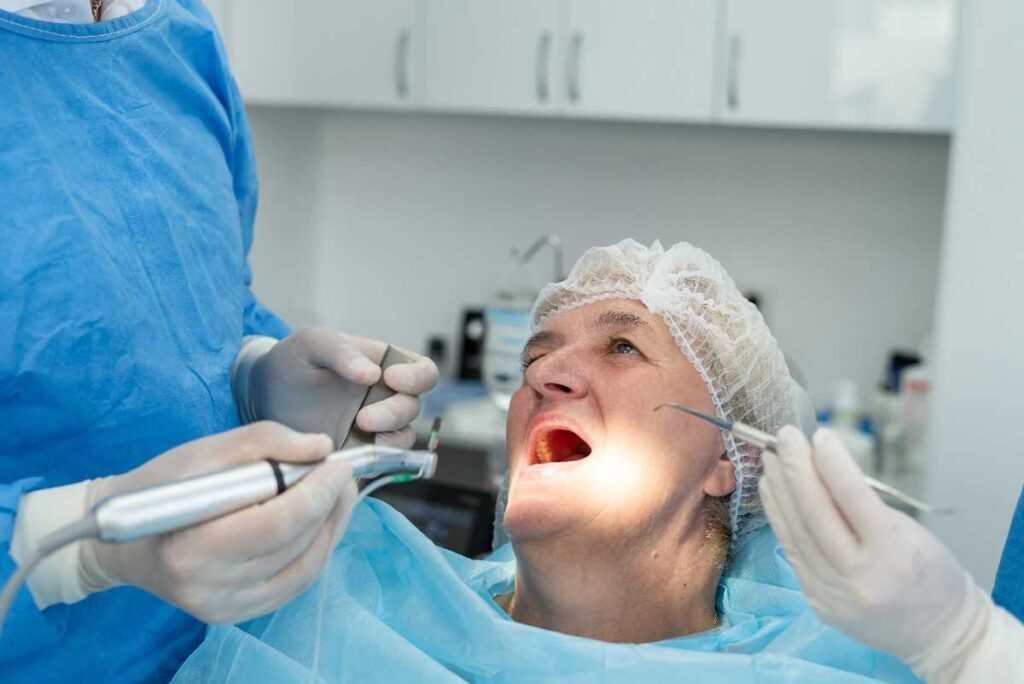
Quick Answer: How to Stop Uncontrolled Bleeding After Implant Surgery
To stop uncontrolled bleeding after implant surgery, place a clean, folded gauze pad directly over the surgical site, bite down with firm and steady pressure for a full 30 minutes, and keep your head elevated. Do not talk, spit, or peek at the site during that time, as interrupting the pressure can disrupt the clot that is forming. Most bleeding settles with this method. If gauze keeps soaking through after an hour of steady pressure, call your dentist without delay.
The 30-minute gauze pressure method
Firm pressure is the single most effective thing you can do at home. Fold a piece of sterile gauze into a small, thick square, moisten it slightly with clean water, and set it right on the implant site rather than beside it. Bite down with even, continuous force. The goal is a stable clot, and a clot needs uninterrupted time to organize. Removing the gauze early to look at the wound almost always restarts the flow.
When bleeding is normal versus an emergency
Pink-tinged saliva and slow oozing during the first day are expected. A mouth that keeps filling with fresh red blood, large clots, or bleeding that soaks gauze every few minutes despite pressure is not normal and needs prompt attention. When in doubt, treat persistent heavy bleeding as urgent and reach out to our team.
What Counts as Normal Bleeding After Dental Implant Surgery?
Normal bleeding after dental implant surgery typically appears as light oozing mixed with saliva and should gradually decrease as the surgical site begins to clot and heal. Because even a small amount of blood can spread through saliva, it may look more significant than it actually is. Mild, controlled oozing immediately after implant placement is therefore generally different from the serious bleeding complications examined in dental research. A systematic review of immediate bleeding complications in dental implants found that severe hemorrhage was uncommon but could occur when nearby blood vessels were injured, particularly after perforation of the lingual cortical plate in the front of the lower jaw. The review identified the mandibular canine region as a higher-risk area and noted involvement of vessels such as the sublingual artery in reported cases.
This distinction is important: a small amount of gradually decreasing oozing is expected after surgery, whereas persistent, heavy, or rapidly increasing bleeding is not and should be evaluated promptly by the dental team. The research specifically focused on severe cases requiring hospital admission, rather than routine postoperative oozing.
Typical timeline: oozing versus active bleeding
Oozing is slow, dark-tinged, and controllable with gauze. Active bleeding is bright red, flows steadily, and returns quickly even after firm pressure. The first few hours produce the most oozing, and it should taper noticeably as the day goes on.
How long bleeding usually lasts
For most patients, meaningful bleeding stops within a few hours, and light oozing may continue and off for up to 24 hours. Small traces of pink in your saliva the next morning can be normal. Bleeding that is still active and heavy beyond 24 hours, or that suddenly worsens, is a reason to call.
| A note from Dr. Bhawna Gupta DDS at Sunnyvale Dental Care “Patients often panic at the sight of a little blood mixed with saliva, but the real signal to watch is whether steady pressure is working. If a full 30 minutes of firm gauze pressure is not slowing the flow, that is when I want to hear from you rather than wait it out.” |
Step-by-Step: How to Control Bleeding at Home
You can control most post-implant bleeding at home with pressure, a tea bag, rest, and clot protection. Follow these steps in order and give each one time to work before moving on.
Apply firm, direct gauze pressure
Place a folded, slightly moist gauze pad directly on the site and bite with steady force for 30 uninterrupted minutes. If bleeding continues, replace the gauze with a fresh pad and repeat once more.
Use a moistened tea bag
If gauze alone is not enough, switch to a moistened black tea bag and bite on it for 30 minutes. The tannic acid in black tea helps blood vessels contract and supports clot formation, which is why it often works when plain gauze does not.
Position, rest, and elevate your head
Sit upright or prop yourself on pillows so your head stays above your heart. Lying flat raises pressure in the head and can encourage more oozing. Avoid heavy lifting, bending over, and strenuous activity for the rest of the day.
Protect the clot
Keep your tongue and fingers away from the site. Do not disturb the area, and let the clot stay put so healing can begin.
What to avoid so the clot stays intact
| Use these 1. Clean folded gauze with firm, steady pressure 2. A moistened black tea bag when gauze is not enough 3. Head elevation and calm rest 4. Soft, cool foods and gentle jaw movements | Avoid these 1. Vigorous rinsing or swishing 2. Spitting forcefully 3. Drinking through a straw 4. Smoking or vaping 5. Hot drinks and hard, crunchy foods |
Rinsing, spitting, and suction from straws all create negative pressure or physical disturbance that can loosen a young clot. Smoking is especially harmful because it slows healing and raises the risk of the clot breaking down.
Why Am I Bleeding So Much After Getting the Implant?
Excessive bleeding after an implant usually comes down to blood-thinning medication, an underlying bleeding condition, or physical disruption of the clot. Understanding which applies to you helps you and your dentist respond correctly.
Blood thinners and antithrombotic medication
Medications that reduce blood clotting are among the most common factors associated with prolonged bleeding after dental implant surgery. Research involving patients receiving antithrombotic therapy has found an increased risk of postoperative bleeding following implant placement, which is why providing your dentist with a complete and accurate medication list is essential. This association is discussed in a systematic review and meta-analysis on antithrombotic therapy and implant-related bleeding. Direct oral anticoagulants have also been associated with a higher risk of postoperative bleeding, as reported in a retrospective case-control study. However, prescribed blood thinners should never be stopped, adjusted, or skipped without medical guidance. Any changes to these medications should be coordinated with the physician or healthcare provider who prescribed them.
Underlying bleeding disorders and systemic risk factors
Inherited or acquired bleeding disorders can cause bleeding to continue longer than expected after routine dental surgery. A narrative review of bleeding disorders in implant dentistry emphasizes the importance of taking a thorough medical history and developing an individualized treatment plan for patients with these conditions. Other factors, including liver disease, certain blood cancers, and some dietary or herbal supplements, may also increase the risk of prolonged bleeding and should be discussed with the dental team before implant surgery.
Physical disruption of the clot
Even a healthy clot can be dislodged by rinsing, poking the area with your tongue, using a straw, or overdoing activity too soon. If bleeding restarts hours after it has stopped, a disturbed clot is often the reason.
When Bleeding Will Not Stop: Emergency Warning Signs
Bleeding that will not stop after an hour of proper pressure is an emergency and deserves same-day care. Call before it escalates rather than waiting overnight.
Red-flag symptoms that need urgent care
- Gauze soaking through every few minutes despite firm pressure
- Bright red blood flowing steadily rather than slow oozing
- Large or repeated blood clots forming in the mouth
- Dizziness, weakness, a racing heartbeat, or feeling faint
- Swelling in the floor of the mouth or difficulty swallowing or breathing
Trouble breathing or swallowing is a medical emergency; call 911. For heavy oral bleeding that pressure will not control, contact us right away.
How our Sunnyvale team responds
Our team treats persistent post-implant bleeding as a priority. We can guide you through pressure techniques on the phone, arrange a same-day visit, and apply in-office measures to stop the flow. Learn more about our emergency dentistry services, and when you need help fast, call Dr. Bhawna Gupta DDS at Sunnyvale Dental Care at 408-720-0900.
How Dentists Manage Uncontrolled Post-Implant Bleeding
Dentists manage uncontrolled bleeding with local measures that promote clotting and, when needed, coordination with your physician about your medications. Most cases are resolved in the office without hospitalization.
Local measures to stop bleeding
In the chair, we can clean and inspect the site, apply pressure with hemostatic materials, place absorbable dressings, and add sutures to close and stabilize the area. Cold application and careful repositioning of the tissue also help. These local steps are usually enough to control the bleeding.
Coordinating with your physician on medications
When a blood thinner or underlying medical condition may be contributing to an increased bleeding risk, the dental team coordinates with the patient’s physician rather than making medication changes independently. Research on the management of systemic risk factors before implant therapy emphasizes the importance of identifying and managing these conditions before and around the time of surgery. This collaborative approach helps support safer treatment planning and reduces the risk of complications during the healing process.
Preventing Bleeding Complications Before Surgery
The best way to avoid uncontrolled bleeding is thorough planning before surgery and disciplined care afterward. Prevention starts at your consultation.
Medical history and medication review
Share every medication, supplement, and health condition before your procedure, including blood thinners, herbal products, and any history of easy bruising or prolonged bleeding. This review lets us plan the timing of surgery and coordinate with your physician as needed, which reduces the risk of a bleeding surprise.
Post-op instructions that protect the clot
Follow your aftercare instructions closely for the first day. Keep pressure on as directed, rest with your head elevated, avoid rinsing and straws, and skip smoking and strenuous activity. These simple habits protect the clot during the most fragile window.
Schedule Your Sunnyvale Consultation
If you are planning an implant or dealing with bleeding after one, we are here to help. Call Sunnyvale implants dentist Dr. Bhawna Gupta DDS at 408-720-0900 to schedule a consultation today at Sunnyvale Dental Care. Our team will review your health history, answer your questions, and make sure you know exactly what to do if bleeding occurs.
Meet Dr. Bhawna Gupta DDS, a top Invisalign Sapphire Provider
Dr. Bhawna Gupta, DDS, is a dedicated dental professional committed to providing personalized, high-quality care in a welcoming and comfortable environment. As the only general dentist (GP) Invisalign Sapphire Provider in the Bay Area, she brings advanced experience in clear aligner therapy and is passionate about helping patients achieve healthier, more confident smiles through carefully planned treatment.
With a strong focus on patient-centered dentistry, Dr. Gupta takes the time to understand each patient’s individual needs, concerns, and long-term oral health goals. Her approach emphasizes clear communication, thoughtful treatment planning, and compassionate care, helping patients feel informed and comfortable throughout every stage of their dental experience.
Dr. Gupta has a particular interest in Invisalign treatment and implant dentistry and continually expands her clinical knowledge by staying current with advancements in dental technology, techniques, and evidence-based care. Her commitment to continuing education allows her to provide modern treatment options designed to improve both oral health and overall patient experience.
She further advanced her training by completing a Fellowship in Implantology at Loma Linda University, strengthening her expertise in implant-based restorative care. After gaining valuable leadership and clinical experience as a Managing Dentist, Dr. Gupta founded Sunnyvale Dental Care to create a practice centered on quality, comfort, trust, and individualized attention.
Today, Dr. Gupta continues to lead Sunnyvale Dental Care with a commitment to clinical excellence and compassionate dentistry. Her goal is to build lasting relationships with patients while providing comprehensive preventive, restorative, cosmetic, Invisalign, and implant care tailored to each individual.
Frequently asked questions
| Q: What happens if implant bleeding won’t stop? If bleeding will not stop after an hour of firm, continuous gauze or tea bag pressure, it is treated as an emergency. Your dentist can apply hemostatic materials, place sutures, and coordinate with your physician if a blood thinner is involved. Trouble breathing or swallowing is a medical emergency; call 911. Otherwise, call Dr. Bhawna Gupta DDS at 408-720-0900. |
| Q: How do you stop bleeding after implant surgery? Fold a clean, slightly moist gauze pad, place it directly over the site, and bite with firm pressure for 30 uninterrupted minutes. If needed, switch to a moistened black tea bag for another 30 minutes since tannic acid supports clotting. Keep your head elevated and avoid rinsing, spitting, straws, and smoking. |
| Q: How long does bleeding last after implant surgery? Meaningful bleeding usually stops within a few hours, and light oozing or pink-tinged saliva can continue on and off for up to 24 hours. Bleeding that is still heavy beyond 24 hours, or that suddenly worsens, should be reported to your dentist. |
| Q: Why am I bleeding so much after getting the implant? The most common reasons are blood-thinning medications, an underlying bleeding disorder or systemic condition, and physical disruption of the clot from rinsing, using straws, or excessive activity. Never stop a prescribed blood thinner on your own; talk with your dentist and prescribing physician. |
For directions, use this helpful Google Maps link or get step-by-step navigation via Get Directions.
Remember: steady gauze pressure for a full 30 minutes is your first and best move, and heavy bleeding that will not stop after an hour deserves a call to 408-720-0900.
Disclaimer: This article is for general information only and is not a substitute for personalized care from your dentist or physician.