

Dental implants are a popular option for replacing missing teeth. Today, dentists can also use robotic technology to help plan and guide implant placement.
But what does robotic dental implant surgery actually involve? Is it more accurate than traditional implant surgery? Does it hurt less, and is it worth considering?
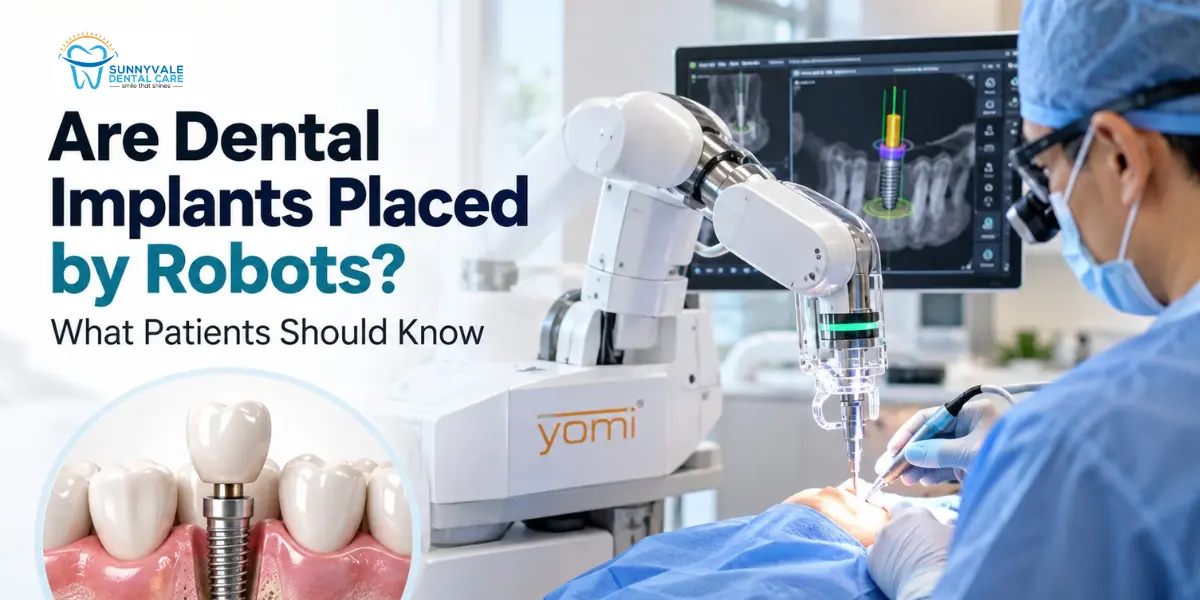
At Sunnyvale Dental Care, we offer Yomi robot-guided dental implant technology. This approach combines digital treatment planning with robotic assistance to help the dentist follow the planned implant position.
The important thing to understand is that the robot assists the dentist. It does not replace the dentist’s judgment, experience, or responsibility for your treatment.
Let’s look at how the technology works, its potential benefits, and what you should consider before choosing dental implants.
What Is Robotic Dental Implant Surgery?
Robotic dental implant surgery uses digital planning and a robotic guidance system to assist the dentist during implant placement.
One example is the Yomi system, which provides guidance and feedback to help the dentist follow a digitally planned implant position and trajectory.
The general process involves three steps:
- Digital planning: The dentist evaluates your teeth, jawbone, and surrounding anatomy using appropriate imaging.
- Robotic guidance: The system assists the dentist in following the planned implant position during surgery.
- Healing and restoration: After placement, the implant heals and integrates with the jawbone before the final tooth replacement is completed, when appropriate.
The exact process depends on your oral health, treatment plan, and the procedure being performed.
Robotic-Assisted Dental Implant Placement: The Yomi Robot
Yomi is a robotic guidance system designed to assist dentists during dental implant surgery. It combines digital treatment planning, real-time tracking, and haptic guidance to help the dentist follow the planned implant position. The dentist controls the surgical handpiece and remains responsible for treatment decisions. Learn more about Yomi.
How Does the Yomi Robot Work?
Before surgery, the dentist uses digital imaging and planning software to determine the implant’s intended position, angle, and depth. During the procedure, Yomi tracks the patient’s anatomy and provides physical guidance and feedback to help the dentist stay within the planned path.
Potential Benefits and Limitations
Yomi may help improve implant placement accuracy and provide additional guidance during surgery. However, it does not guarantee better long-term results, less discomfort, or faster healing. The technology also requires specialized equipment, training, and additional setup, which may affect availability and treatment costs.
Who May Benefit From Yomi-Guided Implant Surgery?
Yomi may be useful in selected cases where precise implant positioning is particularly important, including some multiple-implant and full-arch restorations. However, not every patient needs robotic assistance. Traditional or other guided techniques may be appropriate for many straightforward implant cases.
At Sunnyvale Dental Care, our team can evaluate your oral health, discuss your tooth replacement goals, and explain whether Yomi robot-guided implant placement is a suitable option for you.
Robotic vs. Traditional Dental Implant Surgery
Both approaches aim to place an implant in a position that supports a functional, stable, and maintainable replacement tooth. The main difference is the type of guidance used during surgery.
|
Feature |
Traditional implant surgery |
Robot-assisted implant surgery |
|
Planning |
Clinical examination and appropriate imaging |
Digital planning combined with clinical examination |
|
Surgical guidance |
Dentist’s technique, with surgical guides when appropriate |
Adds robotic guidance and feedback |
|
Dentist’s role |
Plans and performs the procedure |
Plans and performs the procedure with robotic assistance |
|
Best approach |
Depends on the patient’s needs |
Also depends on the patient’s needs and treatment plan |
Robotic assistance can help the dentist follow a planned trajectory, but it does not automatically make every procedure better than conventional surgery. A well-planned traditional procedure can also be an excellent option.
The best approach depends on your anatomy, oral health, restoration requirements, and your dentist’s clinical assessment.
What Are the Potential Benefits of Robotic Dental Implants?
Robotic guidance may offer several benefits in selected cases.
-
Guidance during implant placement
The system helps the dentist follow the planned implant angle, position, and depth. Clinical research suggests that robotic assistance can improve placement accuracy compared with freehand techniques in certain circumstances.
-
Detailed digital planning
Planning before surgery helps the dentist evaluate available bone and nearby anatomical structures. The implant’s position must also support the final replacement tooth, not just fit within the jawbone.
-
Real-time surgical assistance
Robotic guidance provides assistance during the procedure rather than relying solely on a plan created beforehand. Proper planning, system setup, calibration, and clinical judgment remain essential.
Does Robotic Dental Implant Surgery Hurt Less?
Robotic guidance does not guarantee a pain-free procedure or an easier recovery.
Local anesthesia is generally used during implant placement. After surgery, you may experience tenderness, swelling, bruising, or minor bleeding.
Your recovery depends on several factors, including the number of implants, the complexity of the procedure, whether bone grafting is needed, and your individual healing response.
Follow your dentist’s postoperative instructions and attend scheduled follow-up appointments. Contact your dental team if you experience worsening swelling, persistent severe pain, fever, or other concerning symptoms. Heavy bleeding or difficulty breathing or swallowing requires urgent assessment.
Who Is a Good Candidate for Robotic Dental Implants?
Robotic-assisted implant surgery may be suitable for patients who need dental implants and whose treatment can benefit from the technology.
Before recommending implants, your dentist will evaluate:
- Jawbone health: Whether there is sufficient bone to support the implant or whether additional treatment is needed.
- Gum health: Whether gum disease or other oral health concerns need to be addressed first.
- Medical history: Conditions, medications, smoking, and other factors that may affect healing.
- Treatment goals: The number of missing teeth and the type of replacement needed.
Not everyone is a candidate for dental implants, and not every implant case requires robotic assistance. Your dentist can explain whether this approach is appropriate or whether another technique may be equally suitable.
What Is the Dental Implant Procedure Like?
Although every treatment plan is different, the process generally includes four stages.
-
Consultation: Your dentist examines your oral health, discusses your goals, and determines whether implants are appropriate.
-
Treatment planning: Imaging and digital planning help determine the implant position and whether additional procedures are necessary.
-
Implant placement: The dentist places the implant using the selected surgical approach, with robotic assistance if indicated.
-
Healing and restoration: The implant integrates with the jawbone before the final crown, bridge, or other restoration is completed when appropriate.
The overall timeline varies. Healing may take several months, and bone grafting or other preparatory treatment can extend the process.
How Much Do Robotic Dental Implants Cost?
The cost of robotic dental implant treatment varies depending on your needs and the services included in your treatment plan.
Factors that may affect the total cost include:
- The number of implants required.
- The implant, abutment, and final restoration.
- Diagnostic imaging and treatment planning.
- Bone grafting or other additional procedures.
- Anesthesia, sedation, and any applicable technology-related fees.
When comparing estimates, ask whether the quoted price includes the final replacement tooth or only the implant placement.
At Sunnyvale Dental Care, you can schedule a consultation to discuss your treatment options and expected costs before deciding how to proceed.
Why Consider Sunnyvale Dental Care?
Choosing an implant provider involves more than selecting a particular technology. Your treatment should be based on your oral health, individual needs, and long-term restorative goals.
Sunnyvale Dental Care offers dental implant services in Sunnyvale, California, including access to Yomi robot-guided implant technology.
During a consultation, you can discuss your missing teeth, available treatment options, and whether robotic guidance may be appropriate for your case.
Interested in exploring dental implants?
Call (408) 720-0900 or visit Sunnyvale Dental Care to request an appointment.
Frequently Asked Questions
1. Can a robot perform dental implant surgery without a dentist?
No. The dentist remains responsible for treatment planning, clinical decisions, and performing or directing the procedure. The robotic system assists with surgical guidance.
2. Are robotic dental implants more accurate than traditional implants?
Research suggests that robotic guidance can improve implant placement accuracy compared with freehand techniques in certain circumstances. However, improved accuracy does not guarantee better long-term outcomes for every patient.
3. Do robotic dental implants heal faster?
Not necessarily. Healing depends on bone quality, the patient’s health, the complexity of surgery, and whether additional procedures are needed. Robotic guidance does not eliminate the time required for bone integration.
4. Are robotic dental implants more expensive?
Costs vary by practice and treatment plan. Ask for an estimate that identifies the implant placement, final restoration, imaging, and any additional procedures or technology-related fees.
5. Can anyone get robot-guided dental implants?
No. Your dentist must evaluate your bone health, gums, medical history, and restorative needs. Robotic assistance is not necessary or suitable for every case.
6. Where can I get robotic dental implants in Sunnyvale, CA?
Sunnyvale Dental Care offers Yomi robot-guided dental implant technology. Call (408) 720-0900 to schedule a consultation and discuss whether this approach may suit your needs.